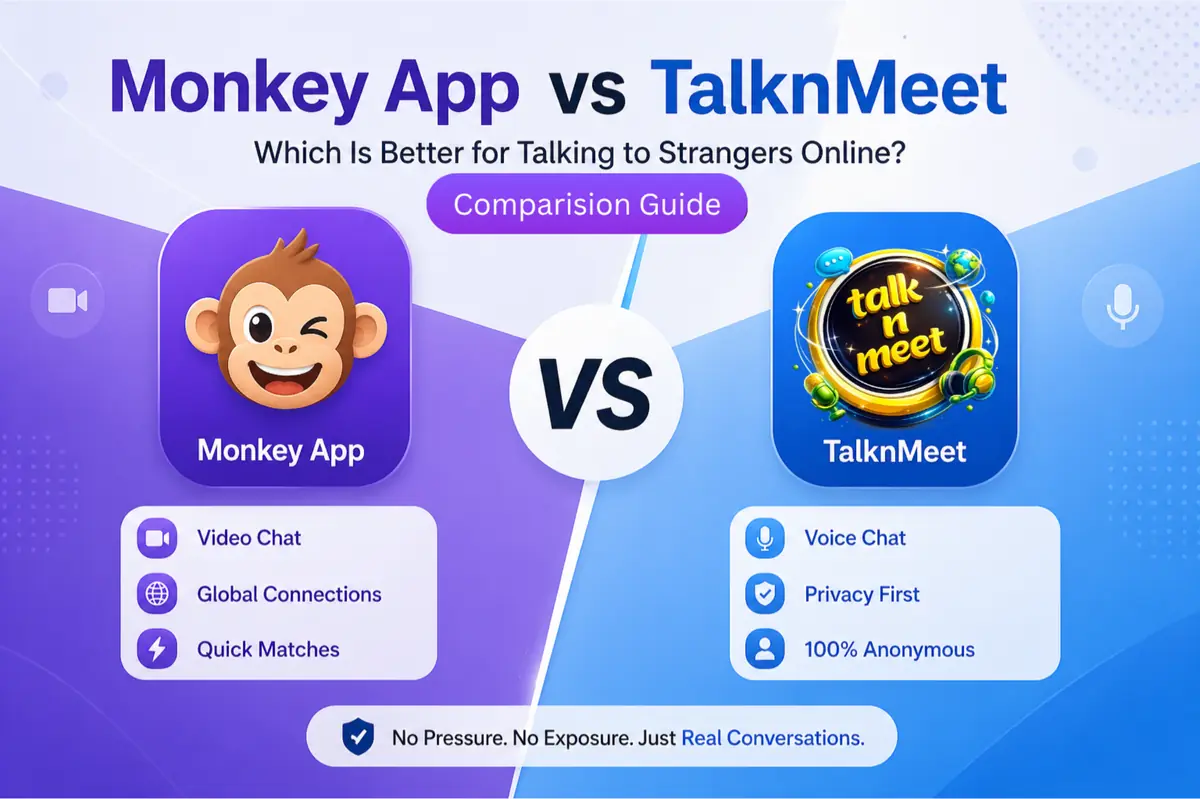
Monkey App is a video-first random chat app. You get short, fast connections with strangers — often through live video — in a format that feels social and quick. Matching is built around seeing and being seen, similar to other random video chat products aimed at younger users.
Strengths: it can feel engaging and lively. If you enjoy spontaneous video interaction and a playful, app-native experience, Monkey App delivers that energy. Connections tend to happen fast, which suits people looking for light entertainment rather than long, calm talks.
People often choose it for instant social energy. You see a face, read reactions quickly, and decide in seconds whether to continue. For users who treat random video chat like quick entertainment, that pace can feel exciting.
Concerns worth knowing: privacy is tied to video — your face and surroundings are part of the deal. Moderation quality varies by platform and reporting flow, as with many random video chat services. Forced or default video exposure is not comfortable for everyone, especially if you want anonymous chat without showing yourself.
The audience skews younger on many short-video random chat apps. That shapes the tone of conversations — quicker, more performative, sometimes louder. None of that is inherently bad, but it is different from a slow, one-to-one voice call with a stranger.
The experience is usually built for motion: short sessions, rapid turnover, and a “what’s next?” rhythm. That can be fun when you want novelty, but it is less ideal when you are trying to listen closely, share something personal, or keep the volume low in a shared space.
If you are weighing Monkey App against a browser-based voice option, think about friction too. Native apps often ask for permissions up front, while a no-install site can feel lighter when you only want occasional anonymous chat.
The moment your camera turns on, things change. Some people thrive in that format. Others feel pressure immediately, even before the conversation starts.