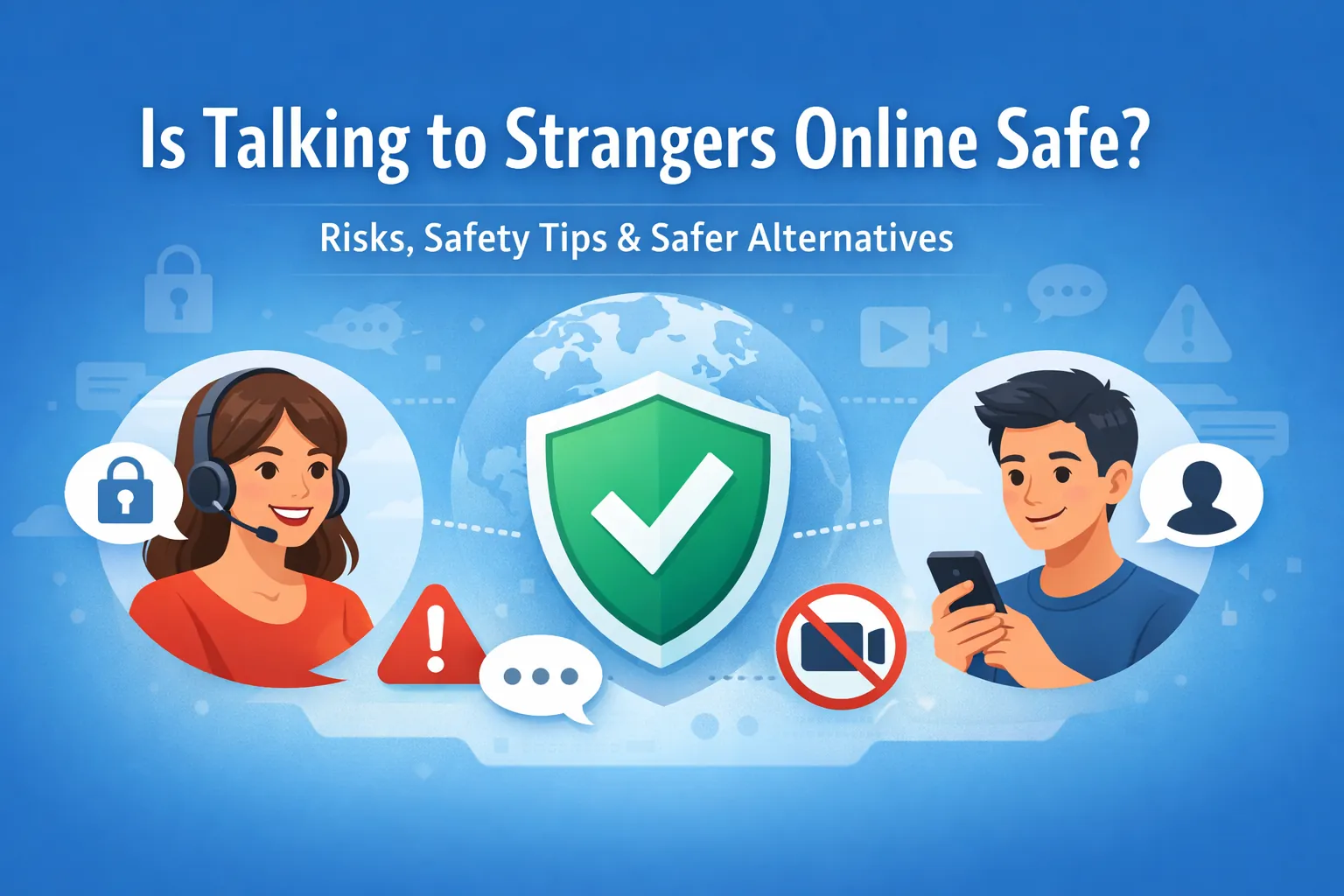
Is Talking to Strangers Online Safe?

TalknMeet TeamBy TalknMeet Team
calendar-iconFebruary 14, 2026
calendar-icon12 min read
Is talking to strangers online safe? A guide to online chat safety on TalknMeet

The short answer: it depends on where and how you do it. Talking to strangers online can be safe when you choose the right platform, keep your boundaries, and stay aware of common risks. Millions of people talk to strangers online every day — the key difference is choosing platforms designed with safety and control in mind. It is not inherently dangerous — but some environments are riskier than others.

Learn the real risks, proven safety tips, and how to talk to strangers online safely without video or exposure.

This guide covers what you need to know about online chat safety: the real risks, why older platforms like Omegle became unsafe, how modern platforms are designed differently, and practical tips so you can make informed choices.
Understanding Online Chat Safety

Many people wonder whether talking to strangers online is safe. The truth is that safety is not about avoiding strangers altogether — it is about choosing the right environment and knowing what to watch for. Millions of people have meaningful, low-risk conversations with strangers every day through anonymous chat, random voice chat, and text-based platforms.

The key is awareness. When you understand common risks, how platform design affects safety, and simple habits that protect you, you can

speak to strangers online with confidence instead of fear.

Common Risks When Talking to Strangers Online

Being honest about risks helps you stay safe. Here are the main concerns people face when they talk to strangers online:

Scams and manipulation

Some people use anonymous chat to ask for money, personal information, or access to accounts. Never share passwords, bank details, or send money to someone you met online. Legitimate strangers do not need these things.

Inappropriate content

On unmoderated platforms, you may encounter content that makes you uncomfortable. This is especially common on video-based platforms where exposure is higher. Platforms with weak moderation or no reporting tools leave users more vulnerable.

Lack of moderation

When platforms do not actively moderate or provide easy ways to report abuse, harmful behavior can go unchecked. The best online chat safety comes from platforms that take moderation seriously and give users control over their experience.

These risks are real, but they are not inevitable. They are more likely on certain types of platforms — and less likely when you choose environments built with safety in mind.

Why Platforms Like Omegle Became Unsafe and Were Shut Down

Omegle was one of the most popular places to talk to strangers online for over a decade. It shut down in November 2023, and understanding why helps explain what makes online chat unsafe — and what modern platforms do differently.

Omegle relied on random video chat with minimal moderation. Over time, it faced legal pressure, safety complaints, and the near-impossible task of moderating millions of anonymous video conversations. Inappropriate content, misuse by minors, and lawsuits made it unsustainable to keep running.

For a deeper look at what happened, our article on why Omegle shut down covers the full story. The main takeaway: platforms that force video, lack moderation, and offer little user control tend to become unsafe. That is why many people now look for safe Omegle alternatives that prioritize privacy and user safety — and let you talk to strangers online with more control.

Older random chat platforms, especially video-first ones, struggled because video exposes users more, is harder to moderate at scale, and attracts misuse. Modern Omegle alternatives have shifted toward anonymous voice and text chat instead. Voice and text reduce visual exposure, are easier to moderate, and give users more control — without removing the human connection. That shift reflects what users and platforms have learned about online chat safety over time.

How Modern Platforms Improve Safety

Today, many platforms are designed with online chat safety in mind. They improve on older models in several ways:

  • Anonymity without exposure — you can talk without sharing your face, name, or personal details
  • Voice and text over video — formats that reduce visual exposure and often feel calmer
  • One-to-one conversations — private chats instead of chaotic public rooms
  • Instant exit — you can leave any conversation immediately if it does not feel right
  • Reporting tools — ways to flag inappropriate behavior so platforms can act
  • These design choices do not eliminate all risk, but they significantly reduce it. When you can choose how you communicate, leave freely, and stay anonymous, online chat safety improves.

    Online safety experts consistently recommend anonymity, user control, and instant exit as core protections when talking to strangers online. Platforms that prioritize these features tend to offer calmer, safer experiences for users.

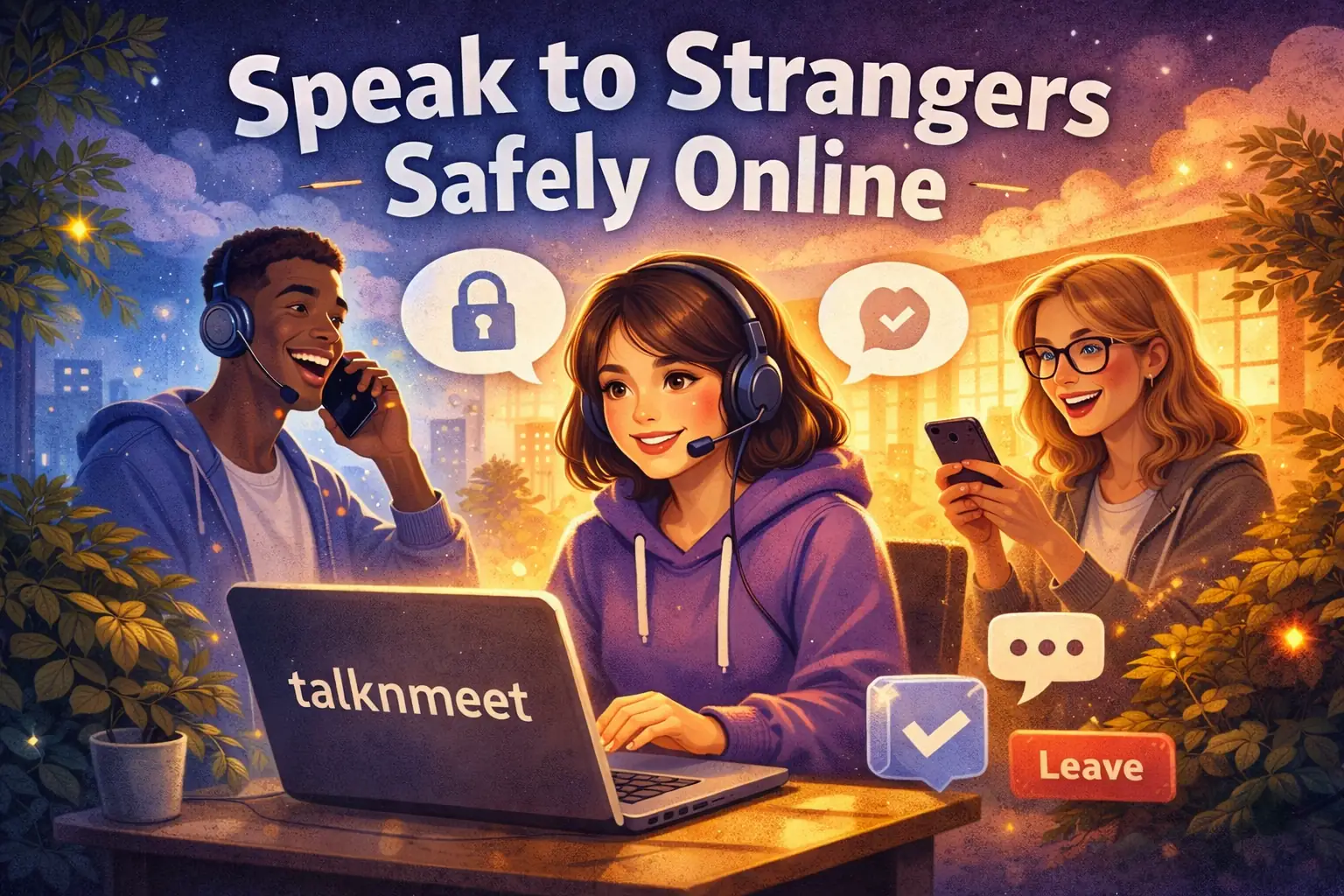
    Platforms built to help you talk to strangers online safely often combine these features — anonymous voice and text chat, no forced video, and user control — to create calmer, safer experiences. If you want to talk to strangers in a low-pressure way, these design choices make a real difference.

    Voice Chat vs Video Chat: A Safety Perspective

    From a safety standpoint, voice chat and text chat generally offer more control than video chat. Here is why:

    Video chat exposes your face and surroundings. That can feel invasive, especially when you do not know the other person. It also makes it easier for someone to record or screenshot you without consent. Voice chat keeps the human connection — tone, warmth, presence — without the visual exposure.

    Text chat adds another layer of control. You can take your time, think before responding, and avoid the pressure of real-time performance. Many people find that random voice chat or anonymous text chat feels safer than video because they can participate without showing their face.

    This is not to say video is always unsafe. But if you are concerned about online chat safety, choosing voice or text over video is a practical way to reduce risk while still connecting with strangers.

    When people ask "is talking to strangers online safe?" the format matters. Voice and text chat tend to feel safer because they offer more control and less exposure — without sacrificing the chance to talk to strangers and connect.

    Practical Safety Tips for Online Chat

    Whether you use anonymous chat, random voice chat, or text-based platforms, these habits help you stay safer:

  • Do not share personal information — real name, address, phone number, or social media handles
  • Never send money or share financial details, no matter how convincing the story
  • Trust your comfort level — if a conversation feels off, leave. You do not owe anyone an explanation
  • Choose platforms with reporting tools and clear community guidelines
  • Prefer one-to-one chats over large public rooms when possible
  • Use platforms that let you exit instantly — no pressure to stay in a conversation
  • These tips are not about living in fear. They are about staying aware so you can talk to strangers online safely and enjoy the experience without unnecessary risk.

    For more detailed guidance, our guide on how to speak to strangers safely online goes deeper into emotional comfort, boundaries, and platform choices.

    When Talking to Strangers Can Be Positive and Healthy

    It is important to balance awareness with perspective. Talking to strangers online is not dangerous by default. For many people, it is a source of connection, curiosity, and emotional relief.

    Anonymous conversations can ease loneliness, offer a space to think out loud, or simply provide a moment of human contact without the expectations that come with friends and family. People use anonymous voice and text chat to practice languages, hear new perspectives, or feel heard without judgment.

    The goal is not to avoid talking to strangers — it is to do it in environments that feel safe and respectful. When you choose the right platform and keep simple boundaries, these conversations can be genuinely positive. Many people talk to strangers online every day and have calm, meaningful exchanges.

    How TalknMeet Approaches Safety

    TalknMeet is designed around a few principles that support online chat safety. No hype — just how it works.

    The platform focuses on anonymous voice and text chat, not video. You can talk to strangers without showing your face, which reduces exposure and pressure. Conversations are one-to-one, so you are not dropped into loud public rooms. There are no accounts or profiles required — you can start a conversation without sharing personal data.

    You can leave any conversation instantly. If something does not feel right, you disconnect and move on. The idea is to give users control over their experience rather than trapping them in uncomfortable situations.

    If you want to see how it compares to older platforms, our Omegle vs TalknMeet comparison covers format, privacy, and overall approach. TalknMeet is one option among many — the point is that platforms built with these design choices tend to feel safer for people who want to talk to strangers online without unnecessary risk.

    Is Talking to Strangers Online Safe? A Direct Answer

    So, is talking to strangers online safe? Yes — when you stay aware, choose platforms that give you control, and trust your comfort level. Safety is not about avoiding strangers; it is about awareness, platform choice, and user control.

    Pick environments that support anonymity, voice or text chat over video when possible, and the freedom to leave anytime. Keep simple boundaries: do not share personal details, trust your instincts, and leave when something feels off. With those habits,

    chat with strangers online can be a calm and positive experience — whether you use a specific platform or not.

    For people comparing platforms, understanding safety is often the deciding factor when choosing between Omegle-style websites and modern Omegle alternatives.

    Frequently Asked Questions About Online Chat Safety

    It can be. Safety depends on the platform you use and the boundaries you keep. Choose platforms with anonymity, one-to-one chats, and the ability to leave instantly. Avoid sharing personal information and trust your comfort level.

    Common risks include scams, inappropriate content, and platforms with weak or no moderation. Video chat can increase exposure. Lack of user control — such as being unable to leave easily — also makes chat less safe.

    Generally yes. Voice chat keeps the human connection without exposing your face or surroundings. It reduces the risk of unwanted recording and often feels less invasive. Many people find anonymous voice chat or text chat safer than video.

    Omegle shut down in November 2023 due to legal pressure, safety concerns, and the difficulty of moderating anonymous video chat at scale. For more detail, see our article on why Omegle shut down.

    The safest places to talk to strangers online are platforms that offer anonymous voice or text chat, one-to-one conversations, and the ability to leave instantly.

    TalknMeet

    is designed around these safety principles, allowing people to talk to strangers without video, personal profiles, or pressure.

    If you want to compare multiple options, our guide to Omegle alternatives explains which platforms are built with safety in mind and why.

    No. Safe platforms do not require real names, photos, or personal details. Anonymous chat is designed so you can connect without exposing your identity. If a platform asks for sensitive information, consider using a different one.

    Talk to Strangers on Your Terms

    If you want to talk to strangers online safely, TalknMeet offers anonymous chat through voice and text chat — no video, no signup, and you can leave anytime.

    talk to strangers footer

    © 2023-2026 talknmeet.com - All Rights Reserved